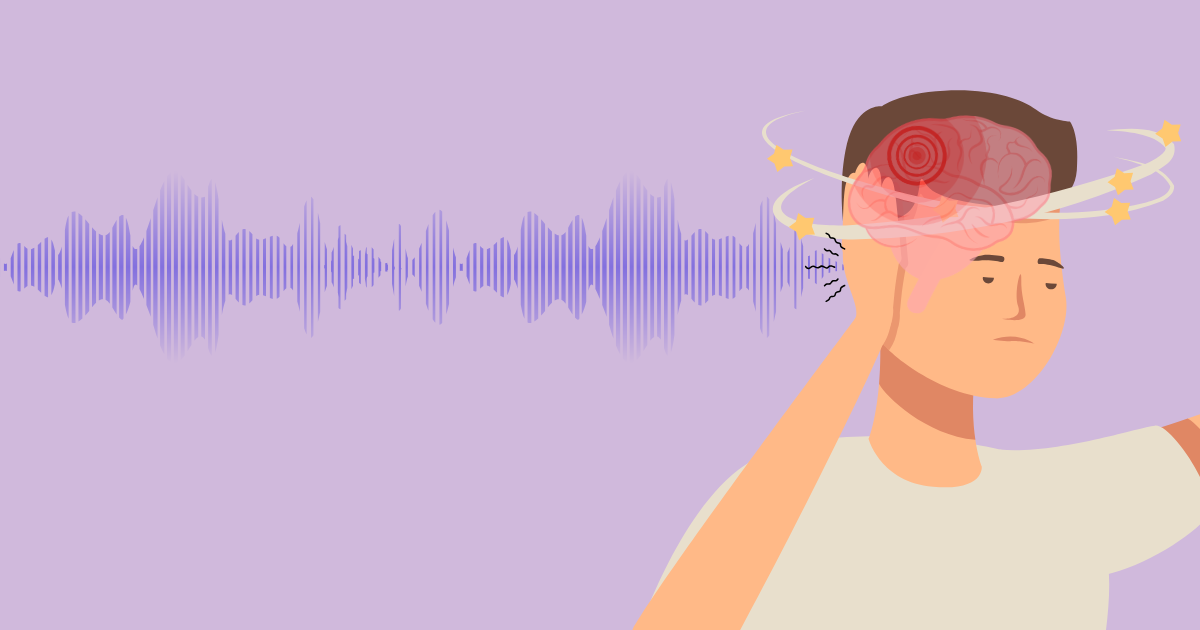
Understanding the Connection Between Head Trauma, TBIs and Tinnitus
If you recently experienced a concussion, car accident, sports injury, fall, or other head trauma and are now experiencing ringing in your ears, buzzing, or other sounds, you may be wondering:
“Could my tinnitus be related to my head injury?”
The answer is yes. A concussion or head injury can contribute to tinnitus.
While many people associate tinnitus with loud noise exposure or aging, head trauma can also affect the way your ears, nerves, and brain process sound. Understanding why tinnitus can develop after a concussion is the first step toward finding the right treatment.
How Can a Concussion or Head Injury Cause Tinnitus?
Your hearing system involves much more than just your ears. Your ears collect sound, your nerves send signals, and your brain processes what you hear. A concussion or head injury can disrupt this communication and may contribute to tinnitus.
Some ways a concussion or head injury may contribute to tinnitus include:
Changes in the Auditory System
A concussion can affect the way the brain interprets and filters sound signals. This may cause the brain to perceive sounds, such as ringing or buzzing, even when there is no outside source.
Because tinnitus can involve changes in how the brain processes sound, some people experience ringing even when their standard hearing test appears normal.
Inner Ear Injury
The force from a head injury can sometimes affect the delicate structures inside the ear that are responsible for hearing and balance.
This may lead to symptoms such as:
Ringing or buzzing in the ears
Dizziness or balance issues
A feeling of fullness or pressure in the ear
Changes in hearing
How Hearing and Balance Are Connected
The inner ear plays an important role in both hearing and balance. The cochlea helps process sound, while the vestibular system helps your brain understand movement and maintain balance. Because these systems are closely connected, changes affecting one can sometimes impact the other.
Hearing also provides important information that helps your brain understand and navigate your surroundings. Sounds like footsteps, voices, traffic, and other environmental cues help with spatial awareness and staying oriented. Research has also found a connection between hearing health and balance, with untreated hearing loss being associated with an increased risk of falls. This highlights the important role hearing plays in helping the brain process information from the environment and maintain awareness during everyday activities.
When hearing becomes more difficult, the brain may have to work harder to process sound. This extra effort can contribute to mental fatigue and make it more challenging to focus on other tasks. Addressing hearing changes and tinnitus may help reduce this strain and improve confidence in daily activities.
Neck and Jaw-Related Factors
Head injuries often involve sudden movement of the head and neck. Whiplash, muscle tension, or jaw issues after an injury can sometimes contribute to tinnitus symptoms.
Some people notice their tinnitus changes with movement, such as turning their head, moving their neck, clenching their jaw, or changing their posture. This can be a clue that factors beyond the ear itself may be contributing to their symptoms.
Does Tinnitus After a Concussion Go Away?
One of the biggest concerns people have is:
“Will I have this ringing forever?”
Everyone’s experience is different. For some people, tinnitus improves as the brain and body heal after a concussion. For others, symptoms may continue, but that doesn’t mean there aren’t treatment options available. How long tinnitus lasts depends on a variety of factors, including the severity of the injury, previous head injuries, changes in hearing, neck or jaw involvement, and overall health factors such as sleep and stress.
If your tinnitus continues after a concussion, you don’t have to simply wait and hope it goes away. Effective tinnitus treatment is available, and at Hope Hearing & Tinnitus Center, we help patients better understand their symptoms and explore treatment options that can provide relief.
Can a Concussion Cause Long-Term Hearing Problems?
A single concussion does not mean someone will develop permanent hearing problems or ongoing tinnitus. However, repeated head trauma may increase the risk of longer-lasting symptoms. This is why proper recovery and addressing symptoms that continue are important.
If tinnitus develops after a head injury, it is worth having it evaluated rather than simply waiting and hoping it improves.
When Should You See a Hearing and Tinnitus Specialist?
Some people wait to seek help because they assume tinnitus is something they simply have to live with. However, a tinnitus evaluation can help identify possible contributing factors, assess your hearing health, and provide guidance on strategies that may help manage symptoms.
Consider scheduling an evaluation if:
Your tinnitus continues after your concussion recovery begins
You are unsure whether a past head injury may be connected to your tinnitus
You should seek medical attention sooner if tinnitus is accompanied by sudden hearing loss, severe dizziness, worsening headaches, or other concerning symptoms.
If You Are Hearing Ringing After a Head Injury, You Are Not Alone
Living with ringing in your ears after a concussion or head injury can be frustrating, but you don’t have to navigate it alone. Understanding what’s causing your tinnitus is the first step toward finding relief, and many people benefit from a personalized treatment approach. The constant ringing in your ears can affect your sleep, concentration, comfort, and overall quality of life. Our team works with patients to evaluate their hearing, identify contributing factors, and develop strategies that fit their needs.
If you are experiencing ringing in your ears after a concussion, accident, or head injury, contact Hope Hearing & Tinnitus Center today to schedule an evaluation and take the next step toward understanding your hearing health.