The Growing Link between Hearing Loss, Tinnitus and Dementia
Tinnitus, hearing loss, and dementia are conditions that are becoming increasingly common in our society. Although these conditions are distinct, there is strong evidence that they are linked. This article explores the research on these connections and how understanding the link between tinnitus and dementia has led to better treatment practices and outcomes for those affected by both conditions.
Understanding Tinnitus
Tinnitus is characterized by the perception of sound, usually a ringing (buzzing, chipring, cicadas) in the ears, which is not actually present in the environment. It can be caused by stress, untreated hearing loss, age-related hearing loss, exposure to loud noises, head or neck injuries, and certain medications. Tinnitus can range from a mild annoyance to a debilitating condition, significantly impacting a person’s quality of life.
Understanding Dementia
Dementia is a progressive neurological disorder that affects memory, thinking, behavior, and the ability to perform everyday activities. The most common form is Alzheimer’s disease, but other types include vascular dementia, Lewy body dementia, and frontotemporal dementia. Dementia is a serious, life-threatening condition that significantly impacts the quality of life for both patients and their loved ones. According to a Global Burden of Disease study, the incidence of dementia is expected to triple from 57.4 million in 2019 to 152.8 million by 2050.
Some key facts about dementia:
Nearly every 3-4 seconds, someone is diagnosed with dementia.
The average annual cost to care for a loved one with dementia is approximately $57,000.
Nearly 50% of all dementia cases are Alzheimer’s-related.
There is no approved drug on the market to treat Alzheimer’s.
Government funding for dementia research is nearly 13 times less than for cancer research.
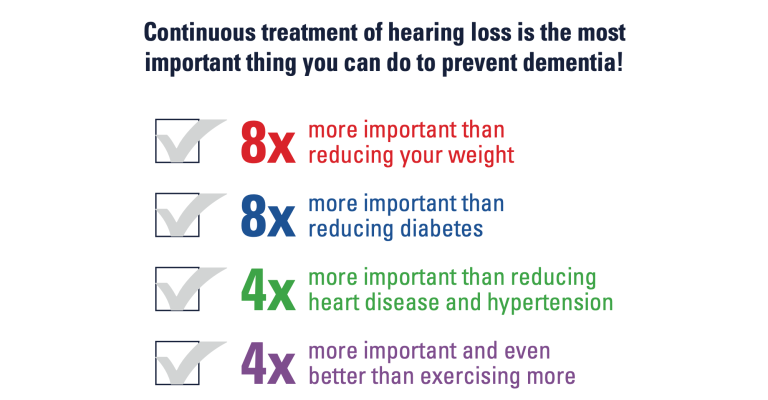
However, there is still hope! Lancet reports that nearly 35% of dementia cases are preventable, with the treatment of tinnitus and hearing loss being the most significant factor.
The Evidence Linking Tinnitus & Dementia
Despite their distinct causes, there is strong evidence that tinnitus and dementia are linked. Hearing loss, which affects over 48 million people in the U.S., is the third most common chronic disorder among seniors. Age-related hearing loss is inevitable for many, affecting nearly 50% of seniors between 60-70 years old, two-thirds of people between 70-80, and nearly 80% of those over 80. This loss of receptor cells in the ear reduces the quantity and quality of neural connections to the brain, impacting memory, hearing, speech, and language.
The association between tinnitus and dementia may stem from shared underlying mechanisms. For instance, both conditions are associated with changes in the brain’s auditory cortex, responsible for processing sound. Additionally, alterations in the hippocampus, a brain region crucial for memory and learning, have been linked to both conditions.
Research from Johns Hopkins Medical Center found that elderly individuals with hearing loss could increase the risk of dementia by 200-500% compared to those without those conditions. This research showed that individuals with hearing loss are significantly more likely to develop dementia over time, with the risk increasing with the severity of the hearing loss.
Other studies have found that the prevalence of tinnitus is higher in people with dementia. Those with Alzheimer’s disease also tend to have worse tinnitus than those without the condition.
Risk Factors Linking Hearing Loss and Dementia
Social Isolation: Hearing loss often leads to withdrawal from social situations due to embarrassment and fear of making mistakes. This isolation increases the risk of dementia.
Cerebral Atrophy: Hearing impairment is associated with accelerated brain atrophy, particularly in areas involved in memory, hearing, speech, and language.
Cognitive Overload: Untreated hearing loss forces the brain to work harder to fill in missing pieces of conversation, increasing cognitive load and the risk of dementia.
Research suggests that untreated hearing loss and tinnitus are the #1 most modifiable risk factors for cognitive decline. By addressing these conditions, individuals can significantly reduce their risk of developing dementia. Effective management of hearing loss and tinnitus is crucial for maintaining cognitive health and preventing the onset of dementia.
Active Aging: Reducing Social Isolation
Active aging involves optimizing opportunities for better health, continuous development, and increased security to maximize quality of life as we age. Maintaining social, physical, economic, spiritual, and civic engagement helps reduce the risk of cognitive decline and dementia.
What can We Learn from this Connection?
According to a Lancet Commission report, addressing hearing loss can play a key role in reducing the risk of dementia. Research shows that hearing treatments not only improve brain function and reduce cognitive load but also help maintain social interaction, which is crucial for preventing cognitive decline. By managing hearing loss, individuals can stay mentally engaged, lowering the likelihood of developing dementia later in life.
As the link between untreated hearing loss, tinnitus, and dementia has been established, the medical treatment of both hearing loss and tinnitus has become more imperative than ever. At Hope Hearing & Tinnitus Center, our prescriptively fit hearing devices and specific treatments for tinnitus have become the gold standard for reducing the risk of dementia, related cognitive decline, and improving the quality of life for all patients.
Everyone can benefit from a consultation. People often don’t realize how much their tinnitus or hearing loss is impacting them until it gets better. Research shows a major connection between the auditory system and cognitive function. Coming in for a baseline evaluation can be highly beneficial. For those outside our service area, we gladly offer Telehealth consultations.